

- What Is Bilateral Stimulation Music?
- How Bilateral Stimulation May Support the Nervous System
- Why Tempo (BPM) Matters in Bilateral Stimulation Music
- How to Use Bilateral Stimulation Music Safely
- Who Might Find Bilateral Stimulation Music Helpful?
- Feeling Curious About What Your Nervous System Needs?
Feeling anxious, overwhelmed, or mentally exhausted can make even simple moments feel heavy. Many people describe this state as feeling stuck, not necessarily in crisis, but unable to fully relax, focus, or settle their thoughts. If that resonates with you, you’re not alone.
Bilateral stimulation music is one gentle, accessible tool used to support emotional regulation and nervous system balance. Through alternating sounds that move left to right, this type of music offers rhythmic sensory input that may help the body and brain settle into a calmer, more organized state.
On my YouTube channel, Unstuck with Elnita Ottey, I offer free alternating bilateral stimulation music as a supportive resource for grounding, relaxation, sleep, and gentle focus. This article explains what bilateral stimulation music is, how it works, and how to use it safely and intentionally.
What Is Bilateral Stimulation Music?
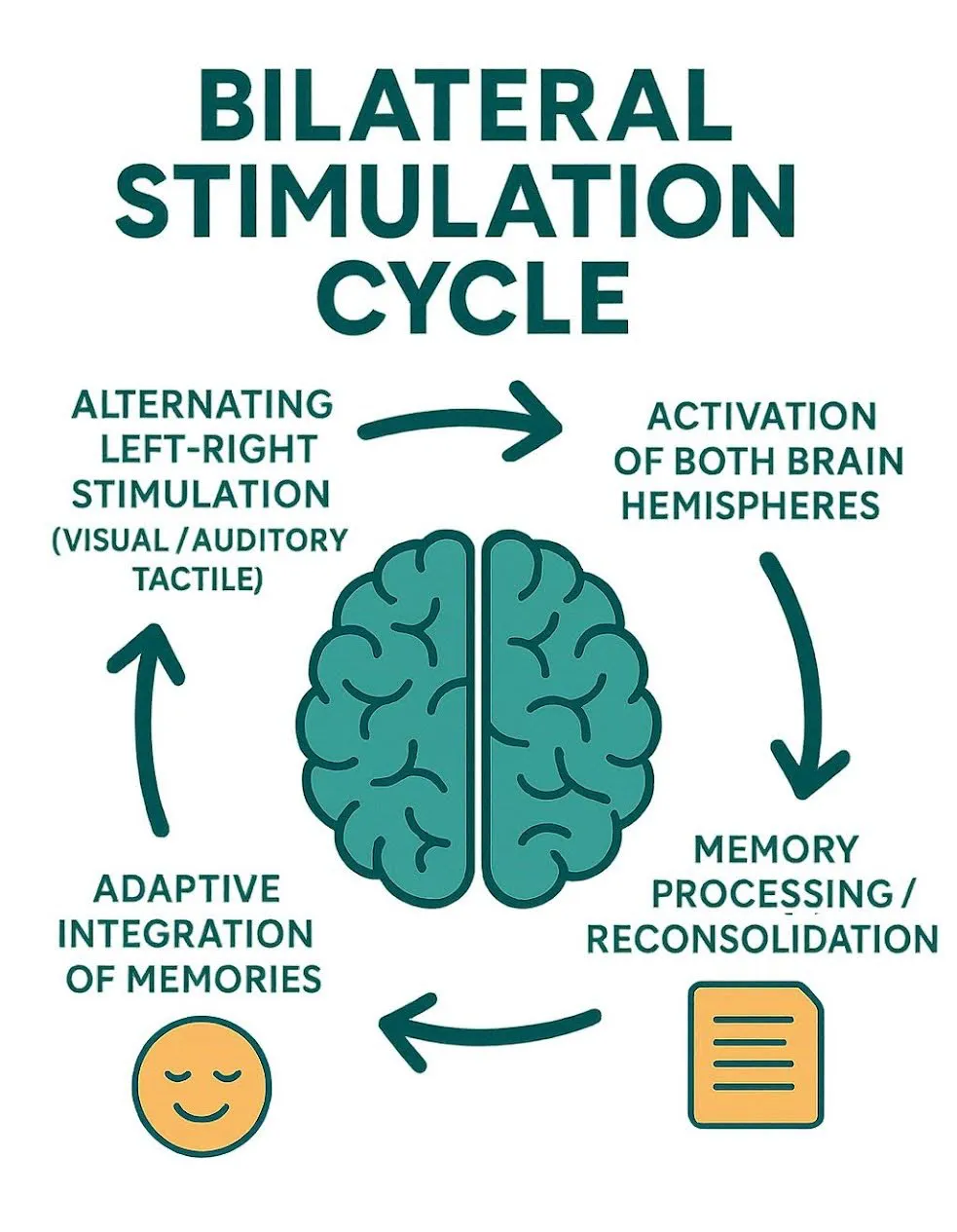
Bilateral stimulation refers to alternating sensory input that moves from one side of the body to the other, left, then right, then left, then right, in a rhythmic pattern. This can happen through sound (alternating tones in headphones), touch (tapping left and right), or visual cues.
Bilateral stimulation music is most widely known for its use in trauma-informed therapies such as EMDR (Eye Movement Desensitization and Reprocessing). In clinical settings, it is used under the guidance of a trained therapist to support the brain’s ability to process distressing experiences.
Outside of therapy, bilateral stimulation music offers a non-invasive, self-directed way to experience alternating auditory input without engaging in trauma processing. It is often used for calming, grounding, or focus rather than memory work.
Research suggests that rhythmic bilateral input may support communication between brain hemispheres and promote nervous system regulation (American Psychological Association, 2017; NIH, 2020). It’s important to note that bilateral stimulation music is not therapy and does not replace working with a licensed mental health professional.
Helpful background reading:
- American Psychological Association – EMDR overview
https://www.apa.org/ptsd-guideline/treatments/emdr - National Institutes of Health – Rhythm and sensory processing
https://www.ncbi.nlm.nih.gov/pmc/articles/PMC5835960/
How Bilateral Stimulation May Support the Nervous System
For many people, bilateral stimulation music offers a predictable rhythm that supports nervous system regulation without engaging in trauma processing. Your nervous system is constantly responding to what’s happening around and within you, stress, emotions, responsibilities, memories, and sensory input. When the system becomes overloaded or stuck in survival mode, you may notice symptoms such as anxiety, racing thoughts, emotional reactivity, or difficulty sleeping.
Alternating bilateral sound provides predictable, rhythmic input, which can be calming for the nervous system. For some people, this rhythm may:
- Support grounding and present-moment awareness
- Help the body shift out of heightened stress states
- Encourage slower breathing and physical relaxation
Neuroscience research shows that rhythm and repetition can influence the autonomic nervous system, particularly when paired with intentional listening and a sense of safety (Cleveland Clinic, 2021).
Further reading:
- Cleveland Clinic – Nervous system regulation
https://health.clevelandclinic.org/nervous-system-regulation/ - Harvard Health – How music affects the brain
https://www.health.harvard.edu/staying-healthy/how-music-can-help-you-heal
Why Tempo (BPM) Matters in Bilateral Stimulation Music
When using bilateral stimulation music, BPM, or beats per minute, refers to the speed of the alternating rhythm. Different tempos may support different nervous system needs.
- Slower BPMs (40–50) are often associated with deep calm, rest, and sleep support
- Moderate BPMs (around 60) tend to feel grounding and stabilizing
- Slightly faster BPMs (65–70) may support gentle focus, energy, and resilience
There is no “right” BPM. Some people feel calmer with very slow rhythms, while others prefer slightly more momentum. The most important guide is how your own body responds.
How to Use Bilateral Stimulation Music Safely
Bilateral stimulation music is meant to be supportive, not overwhelming, especially for individuals with trauma histories. A few general guidelines can help keep the experience regulated:
- Use headphones to experience clear left-right alternation
- Start with short listening periods (5–10 minutes)
- Notice your body’s response rather than pushing through discomfort
- If strong emotions arise, pause the music and return to a grounding activity
- Avoid listening while driving or performing tasks that require full attention
If you have a history of trauma, it’s especially important to go slowly and consider exploring these tools alongside a trauma-informed therapist.
Who Might Find Bilateral Stimulation Music Helpful?
Some people choose to explore bilateral stimulation music to support:
- Anxiety relief
- Emotional regulation
- Grounding during stressful moments
- Sleep routines
- Gentle focus during transitions
Responses vary. Feeling calmer, neutral, emotional, or even unchanged are all normal experiences.
Feeling Curious About What Your Nervous System Needs?
Bilateral stimulation music can be one supportive way to help your body settle, reset, or gently refocus, but it’s only one piece of a much bigger picture. If you find yourself frequently feeling anxious, overwhelmed, emotionally reactive, or “stuck,” working with a trauma-informed therapist can help you better understand what your nervous system is responding to and why.
📍 In-person sessions available in Monroe, NC and the Charlotte Metro area.
🌐 Virtual therapy offered in NC, SC, TN, OK, CO, and OR.
➡️ Learn more at www.elnitaottey.com or find a certified EMDR therapist at emdria.org